THE ARCHIVE · SPANISH · THE AZTEC WORLD
La caída de Tlatelolco
Anales de Tlatelolco, Ms Mex 22 · Anonymous Tlatelolca authors · shortly after 1521
The conquest written from inside the city that fell — in Nahuatl, by survivors, possibly the earliest account of the fall of Mexico from any side. This passage is its moral center: the famine of the final siege, set down by a hand the manuscript itself names — 'the one who saw it wrote it.'
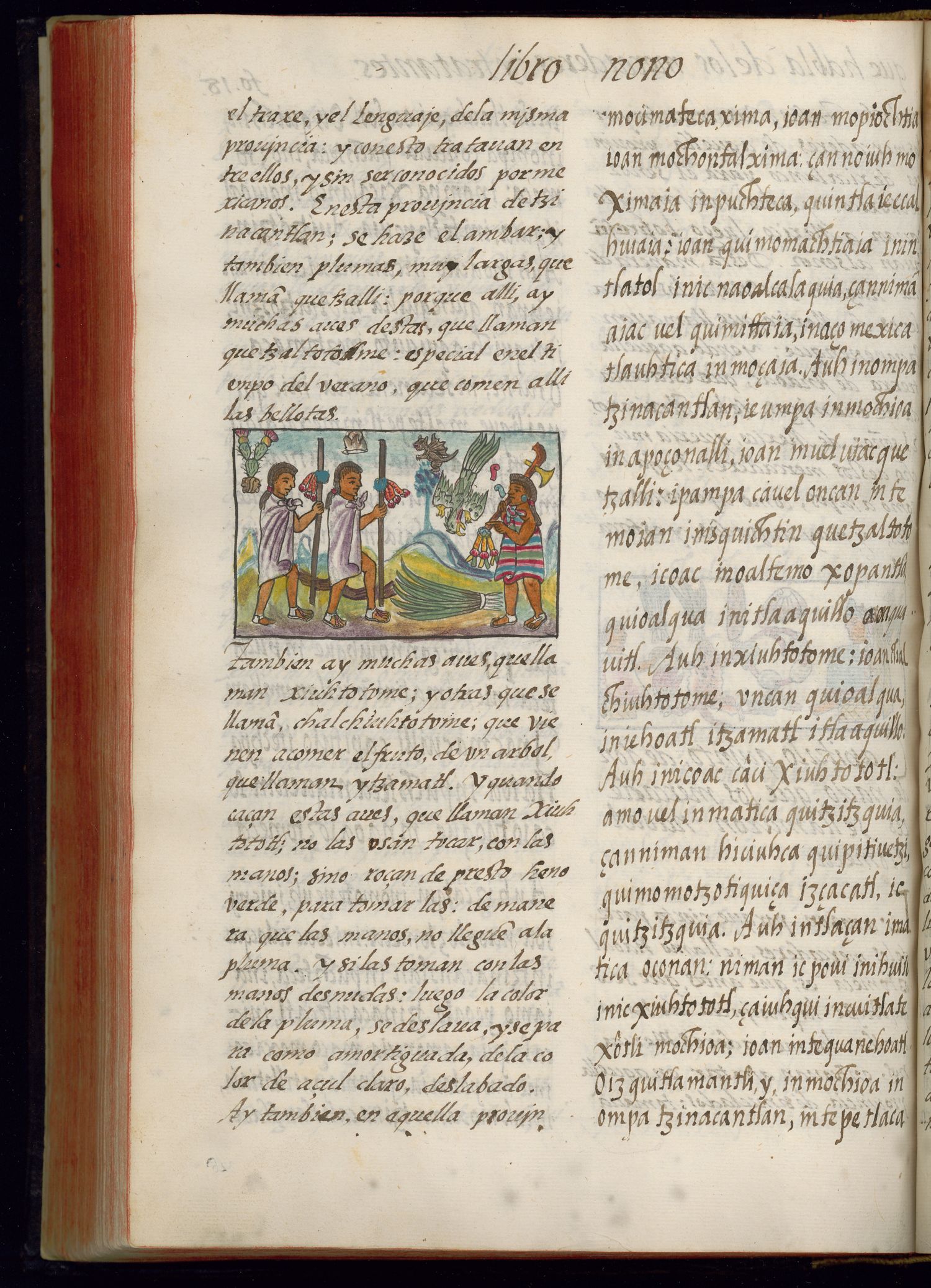
Códice Florentino, Libro 9, folio 18v — los mercaderes pochteca, artistas nahuas, ca. 1577
Florentine Codex, Book 9, folio 18v — the pochteca merchants, Nahua artists, ca. 1577
Getty Research Institute · open access (florentinecodex.getty.edu)
WHICH EDITION — AND WHY
A new Wikowí translation made from the Nahuatl original (Ms Mex 22), corrected for meaning against Rafael Tena's modern Spanish edition (Cien de México / INAH). The closing 'roofless-houses' paragraph is spliced from the companion manuscript, Ms 22 bis. The original column is the cleaned Nahuatl — shown for reference, not glossed word-by-word, because the Baker reads Spanish.
Selection: The great lament of the famine — Section VI, Part 7 (The Fall), with the roofless-houses passage spliced from the companion manuscript, Ms 22 bis.
Modern Spanish — translated fresh from the Nahuatl, corrected for meaning against Tena. Baker enabled.
En el mercado los españoles levantaron sobre una plataforma un dosel de mantas para el Capitán; allá mismo pusieron un trabuco, una máquina que arrojaba piedras, y el combate en el mercado se prolongó diez días más. Esto fue lo que nos sucedió, lo escribió quien lo vio: lo que vimos, lo que nos llenó de asombro, tristeza y llanto, lo que padecimos. Bebimos agua salobre. Comimos ramas de colorín, zacate salitroso, adobe, lagartijas, ratones, polvo y gusanos. Reñíamos unos con otros por unos cuantos gusanos para comer; y cuando un trozo se ponía al fuego, alguien lo arrebataba de las llamas a medio asar y se lo comía. Y se nos puso precio: se puso precio al joven, al sacerdote, a la doncella, al niño; cualquier macehual llegó a valer dos puñados de maíz, o diez panes de mosco acuático, o veinte panes de zacate. El oro, los jades, las mantas, las plumas de quetzal, todo lo precioso, ya nadie lo miraba; quedaba esparcido.
Y por los caminos yacen huesos rotos y cabellos esparcidos; las casas están destechadas, sus muros enrojecidos; pululan los gusanos en las calles, y por las paredes resbalan los sesos. El agua está enrojecida, como si la hubieran teñido; y así la bebimos — tuvimos que beberla.
What to notice
- ✦A marginal note in the manuscript, in a sixteenth-century hand, signs this exact passage: 'this was written by the one who saw it.' It is sworn eyewitness testimony, not a literary lament.
- ✦The horror is entirely in the inventory — brackish water, the worm snatched half-cooked from the fire, colorín wood and lizards and dust. The narrator adds no adjectives; the list is the grief.
- ✦A human life is reckoned in handfuls of maize: 'cualquier macehual llegó a valer dos puñados de maíz.' The price is the indictment.
- ✦Gold, jade, and quetzal feathers — the most precious things in the world — lie scattered and unregarded. Value itself has collapsed.
- ✦The final paragraph, spliced from the twin manuscript, completes the lament: bones and hair along the roads, reddened water — 'y así la bebimos' — and so we drank it.
The same world, other eyes
STORIES BUILT FROM THIS SOURCE
You just read the document. Now read the world it came from — graded for learners, free to start.